A Certain Romance
By Madeleine Foster
Slag?
Owen groans, swipes the message away. He saw it coming. There was no avoiding it: a day off work, the first heatwave of the summer. The tang of barbecues and cider and suncream hanging low and humid across the late afternoon.
The replies come fast. See you in ten, one says.
On my way.
It’s only a short walk from his house to the slag heap, the black megalith that overlooks the town. All the old miners at the White Hart claim it was the largest in the Midlands, paltry pride in their ragged throats. Now, four decades dead, it has grown a matted green skin, dotted with leadwort.
Owen has scaled it countless times. Since his early teens, he has built a ritual of listening to film scores as he clambers over its face. Hans Zimmer, Yann Tiersen, Rachel Portman, Max Richter, Alexandre Desplat.
His favourites, though, all come from Joe Wright films. Pride & Prejudice, Anna Karenina, Cyrano. Owen would probably say that Dario Marianelli was his favourite composer of all time, if anyone ever asked, and if he ever felt like revealing something so cherished.
Atonement. That’s the one that scores his walks across the heap more than any other. ‘The Cottage on the Beach’. He must have listened to it a hundred times over the years. Full blast through his ear buds. The piano whorling, lovelorn; the strings like a swelling ocean; the woodwinds lush in their melancholy. Surreal, almost – like something from another world. He would play it on a loop, play-act as some time-worn protagonist returned from a long journey, staggered by his first gloaming glimpse of home.
As he approaches the slag now, he can make out three figures at its crest: Tom, Callum, Reece. It’s been their regular meeting place ever since their school days. It is the crux – the heartland – of fifteen years of friendship. The place where they first drank, first got stoned. Where they gathered when they bunked off classes. Where Tom, dressed as Scooby Doo, lost his virginity after a Halloween party. Where Reece was almost mugged. The sanctuary to their small smattering of heart-to-hearts.
Owen scales the hallowed mound, breathing heavy in the heat, the sun so bright and blotless it’s almost white – a nuclear blast, the cosmos pressed close against the vault. He was hoping for a day at home. It’s his first day off in almost a fortnight, and his last chance to film his self-tape. The deadline is midnight, but he doesn’t want to submit it at the last minute. He needs to appear professional, he thinks. It’s hard enough to get a foot in the door.
Getting closer, he can hear Callum railing. His hard face and bulbous, tattooed arms already seared by the sun. He’s fair, with thinning blonde hair and small, feminine features. He was always so weedy at school, so unsure – his nasal voice, his odd, jittering blink. Always the butt of the joke, forever a third wheel. It’s still a shock for Owen to see him transformed into a pint-sized meathead. A gym rat with a slavish devotion to muscle mass, protein, personal value – to some masculine regimen of exalted suffering.
‘I swear I can,’ he says, sniffing the air, his head flung backwards. ‘I’ve always been able to smell when a storm’s coming.’
‘Bullshit,’ says Tom, laughing. Tall, mid-build, cropped black hair. Donning a gaudy watch and Tom Ford sunglasses. Gregarious as ever. The self-appointed leader of their group at school. A natural-born drill sergeant – a destined town crier. That he’d ultimately stumbled into a career selling doors and windows had been a surprise to everyone. But his new, fervent dream – to succeed in business, to make a fortune – made sense.
‘You mean the smell afterwards, right? That damp, fresh smell?’ asks Reece: wiry, mop-haired, eyes slim and heavy-lidded. Dressed, as ever, entirely in black, his sallow face gleaming with sweat. Fingertips pink, coarsened by guitar strings. Clumsy stick-and-poke tattoos along his calves. The most constant of all of them. Ardently unchanged since he first glimpsed Jake Bugg on the cover of Q Magazine in 2013.
‘No, no,’ Callum protests. ‘It’s different. Like a metallic smell, or, like, a taste. I swear, it’ll storm tonight.’
‘I don’t think so, Cal,’ Owen says, joining them all at the summit. ‘I reckon it’s just acid reflux from all the Huel you knock back.’
Nobody greets Owen directly – he simply slips in. He spreads his body out across the warm grass, feels the parched blades beneath his palms, and the conversation judders on. He listens to their chatter and gazes out across the skyline: the low, shuttered town below, pallid, so familiar it’s almost nauseating. The chippy, the pubs. The art deco cinema turned fast-food chain. The boarded-up social club. The defunct pit buildings, the rust-red headgear towering and oddly wistful, like some refracted echo of the Wild West.
If he gets home by nine, he reasons, he will still have time to polish the lines and record the self-tape. Even if he doesn’t polish them, it could work – the character is coarse, defiant. Lowborn, but with edge, with attitude. The role seems perfect for him, somehow. Divined.
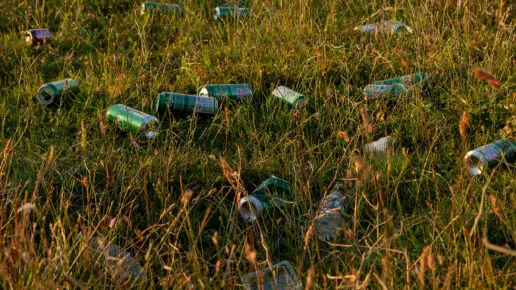
That still gives him over two hours. Easy. The others don’t seem to have any fixed plans for the evening anyway. Reece is hunched over his phone, trying to block the sun from glaring across the screen. Tom and Callum are still bickering, sipping on warm cans of pilsner. They offer one to Owen, which he takes, and they talk for a while about games, TV shows – the same bloodless script.
‘You been writing any new music lately?’ Owen asks Reece, but he’s oblivious, gawping at his phone screen.
‘Shit,’ Reece says. ‘Have you guys seen this?’
He turns the phone around and Tom reaches out, shades the top of the splintered screen with his hand. It’s a news article – Empire magazine. An interview with a nascent filmmaking wunderkind. There, in the headline, is the name of their hometown. They jump to the lead image and, in an instant, recognise the face. It’s Jay.
Callum gasps. ‘No fucking way.’
‘That’s insane,’ says Owen.
‘He’s still got that shit haircut,’ Tom says with a scoff, removing his hand.
Owen takes the phone, maybe a little abruptly, and keeps reading.
Jay Fern, just 27, has come a long way from his early years in a former Midlands mining town, the article reads. His directorial debut, Lonely Hours – which he also wrote – has garnered him a swathe of award nods, including two BAFTA nominations, for Best Director and Best British Film.
The walls of Owen’s stomach zap. The heat seems to swell, his lip mangled between his teeth.
‘I don’t get it,’ says Reece, lying backwards against the slag heap. ‘I watched his film. It wasn’t, like, amazing or anything.’
Owen can’t speak. He feels winded. He had watched the film, too – not at the cinema, he couldn’t face it. He streamed it from a dodgy site at home. He’d really wanted to hate it, but he couldn’t. It was stunning. It was a coming-of-age tale about a kid with bipolar disorder, and every aspect – the script, the acting, the cinematography, the score – was astonishing. Owen was under its spell for days.
‘Yeah, I didn’t rate it,’ Tom says. ‘Felt pretentious.’
Callum agrees, calls it woke. ‘The girlfriend in it was so obnoxious.’
Owen still can’t speak. He’s ruminating on old resentment. He’s never been able to reconcile the meteoric auteur with the Jay he knew at school. He was quite chatty, not super academic. Unexceptional. Hardly some prodigy. They crossed paths at parties, and in their form room. They were in drama class together, and Owen had tried to talk to him a few times about films. But Jay had never heard of Harold and Maude, or Paris, Texas. Or any of the New Waves.
‘What’s he said about our town, then?’ asks Reece, wiping sweat from the dark rings beneath his eyes.
Owen clears his throat, forces a steady tone. ‘Fern’s next project will take him all the way back home. “I’ve always wanted to document the lives of the people I grew up with. The good and the bad. Their hardships, their humour. I always felt that their lives embodied the state of the nation, in a way. The end result of austerity and division, and the disenfranchisement of working-class communities.”’
Callum snorts. ‘Oh, fuck right off.’
‘Doesn’t he live in the US now?’ Reece asks.
‘I can’t imagine him there,’ Owen says, trying to picture it: Jay, sun-bronzed, chatting over boozy brunches with studio heads and arthouse actors. Mid-century mansions with Hockney-blue pools. His accent smoothed over, like a skin tuck, flat and perfect.
‘He hasn’t lived here since year ten,’ Tom says. ‘He can’t lay claim to it now.’
‘Where did he go again?’ asks Callum.
‘A private school over in Leicester,’ Owen says.
‘On a scholarship,’ Reece adds.
‘Still,’ Owen says. ‘He still went. He can’t act like he speaks for the town if he went to private school.’
Tom agrees. ‘Yeah, he can fuck off, coming back here to make some gritty Ken Loach shit. He doesn’t actually care. It’s all about his ego.’
Owen, reading absently on, half wonders if he should contact Jay about a role. Surely he could pull in a favour? And Jay has so much hype around him, it could be huge. For a moment, he’s dazzled by the thought of it: no more waking up at 4am, pulling on a Tesco fleece, driving the delivery van through blue dusky streets. Even if just for a few months of filming. Even if it all came to nothing. Just to act for a few weeks, even in a minor role. For a glimpse of a film set, to hold a script in his hands. To perform, and embody – to feel what it’s like to create something richer. To make contact with that wild, far off, maddening thing. To be able to look back on it always.
Callum lights a cigarette, pushes smoke out the side of his mouth. ‘Imagine he writes characters based on us.’
The group forces a laugh.
Callum continues. ‘Like, remember when Owen had a whitey at school, behind the sports hall? He could include that.’
‘Bellend,’ Owen hisses, slapping the ciggie out of Callum’s hand. He chuckles, scrambles to retrieve it from the bleached moss beneath his knees.
‘Or when Cal got sparked out by a bouncer at Walkabout,’ Tom says, peering impishly over his sunglasses.
‘You what?’ Reece says, excited, raising his torso from the hot skin of the heap.
‘Were you not there?’ Owen asks. ‘Oh my god, it was brilliant. He was harassing some girls and got kicked out. Tried to square up to security.’
Callum protests: ‘No, that’s not—’
‘I swear, they were like fifteen as well,’ Tom says.
‘Jesus,’ Reece groans, then beams. ‘You never know, Cal, you might get the starring role. He might make a film about sted-head incels.’
None of them laugh, though Tom and Owen inhale, mouths twisted into nervous smirks.
‘Fuck off,’ Callum spits, glowering. In the silence that follows, a bluebottle hums past. Laughter echoes from a garden nestled in the folds of asphalt below.
After a moment, Tom pipes up, ever ready to salvage the mood. ‘I reckon I could star in it,’ he says, wiping sweat from his receding hairline. ‘Like England’s own Wolf of Wall Street. My rise to riches.’
Owen is jolted by his frankness. His ease at disclosing things that feel too precious, too grand.
‘Riches?’ Reece laughs, still riled. ‘What, the shitty commission you peddle by cold calling pensioners?’
‘My smooth talking,’ Tom quips, unruffled. ‘My masterful sales acumen.’
‘Delusional,’ Reece says, rolling backwards across the grass, throwing a pink forearm over his eyes with a sigh. He’s too hot, Owen thinks. It’s his clothes. He’s hot and irritable.
Tom chuckles. ‘At least my money’s mine,’ he says. ‘And I’m not blowing my salary on rent. You still covering Emma’s half as well?’
‘She’s struggling for gigs at the minute,’ Reece says, face still covered, a slight glint of venom in his tone. ‘We both are. Venues are all skint, that’s all.’
‘Right, but you’re the one who teaches guitar to a bunch of six-year-olds to keep the bills paid. You’re so under the thumb, mate, it’s insane.’
‘Least I have a girlfriend, mate,’ Reece snaps, drawing his arm away, pushing himself up on his elbows. ‘And at least I’m not still living with my Mum at twenty-eight.’
Tom laughs again – a bark, a serrated edge. ‘We all are, mate,’ he says, taking a swig of his drink and gesturing to Owen and Callum. ‘It’s not that weird. It just makes more sense, financially.’
Reece grunts. ‘Alright, says the guy who goes out drinking six nights a week.’
As they bicker, Owen watches on, laughing noiselessly to mask his unease. He can feel it thicken, coagulating beneath his skin. He tries to tune them out, turns his thoughts to how he might approach Jay. He might still have him on Facebook – maybe he could message him? Though that would be unprofessional, probably. Better to search properly tonight, find some kind of company contact, ask a little more about the project – just out of curiosity, as an old friend – then see where the conversation leads.
He should still film the audition tape, too, he tells himself. It’s always worth having a few things in play. He hasn’t submitted many audition tapes but he knows the odds are always low. He needs to throw as much as he can and see what sticks.
He feels a small fizz of excitement, a giddy sense of motion. He glances at his watch. It’s just past seven. He still has time. And if he’s home before nine, and doesn’t drink another can, all the better.
Tom and Reece are still arguing, and Callum has waded into the fray. There’s still a semblance of friendliness – the coarse edge of teasing from people who know one another too well.
‘You’re like her bitch,’ Callum says. ‘She’s got you on a leash, man. You do everything while she sits around on her arse all day.’
‘You can talk,’ snaps Reece. ‘You haven’t had a proper job in years. You know you can’t just call yourself a PT, mate. It’s more than just posting gym videos on TikTok. You actually need to make money from it.’
Owen, feeling weary and irritable, stares out across the town again. The self-tape, Jay’s project – both strike him as some close, agonising salvation. A break from these same arguments, these same people, these staggeringly short, twenty-seven years, with so little to punctuate each day from the next.
Not for the first time, he is overcome by a sapping loathing for each of them. Tom, the wannabe money-grubber, with his pathetic devotion to flaunting nonsense – watches, trainers, phones. His depressing, commission-only sales job. His ridiculous leased Audi.
Callum, with his undiagnosed eating disorder, his miserly influencer delusions. His complete refusal to indulge in heartache, or disappointment, or self-reflection. To think for himself, even. How he obscures his fears and aimlessness with a bull-headed dogma of self-improvement. How he places blame for his isolation, his boredom, for the tedium and derailment of his life, on women – on anyone but himself.
He even resents Reece. In fact, somehow, Reece strikes Owen as the most unbearable of them all. Because for all his intelligence and talent, he can’t accept that it’s over. That his life will simply be ordinary. That he’s too old, frankly, and too insignificant – and neither intelligent nor talented enough – to ever actually make it in music. That he’ll forever depend on rich kids whose parents are failed rockstars, too.
Gazing out across the flat, flowerless hinterlands of deepest England, Owen thinks of all the time his friends have taken from him. Of how much of his life they’ve sucked up.
He looks to Reece again, his skin flushed with heat, with barely suppressed rancour. He can see it in Reece too, he realises. The annoyance, the boredom, the despair. It’s all there. He can see how Reece sees himself: promising, outgrown. Owen wonders why Reece never says anything. Why none of them do. Is it out of love – a sense of loyalty? It can’t be. Love doesn’t make people so cowardly. So dishonest. It’s something more insidious. A sort of carelessness. A too-deep familiarity. A shared, unspeakable shame.
The bickering, by now, has amplified. Reece is calling Callum bitter, jealous. Callum is bragging about all the girls in his phone.
‘We should all go for a drink,’ Tom says, attempting to break the barrage. ‘It’ll get cold soon.’
Owen’s body stutters. If they go to the pub, they’ll end up staying until last orders. He’ll be there all night.
‘Sounds good,’ Callum says, flicking a half-finished cigarette down the heap.
Owen scrambles around for excuses. He could say he feels ill, or that he has plans the next day. But what plans? They know he doesn’t have work. They know he has no girlfriend, no other friends. Anything he could make up feels embarrassing somehow. Exposing. Earnest.
‘Come on, Reece,’ Tom says, nudging his arm. Reece flinches, rubs the bridge of his nose, shakes his head. He’s too far gone, Owen thinks.
‘Come on mate, we were only messing,’ says Callum.
‘Fuck off,’ Reece grunts. ‘I’m not in the mood, go without me.’
A glint of hope – Owen can linger on, make out that he’s going to keep Reece company.
‘Come on, Reece, don’t be a buzzkill,’ Tom says, rising to his feet.
‘We were only kidding,’ Callum adds, standing with a groan. ‘Honestly. We do like Emma. We don’t actually think you’re her bitch, you know.’
‘That’s bollocks,’ Reece snaps. ‘I’m sick of you insulting her. Insulting my relationship. You don’t take us seriously at all.’
Owen holds a hand out to Reece, offers his most soothing tone. ‘That’s not true, mate. We do.’
Tom lets out a rasping sigh. ‘You’re always so sensitive. Why can’t you ever just have a laugh?’
Reece grimaces. ‘I’m not sensitive, I’m just fed up of the same shit. You don’t take me seriously. You talk about my life like it’s a joke, you always have. You joke about Emma, about my music.’
‘Come on, Reece, we used to come to all your gigs growing up. We do take you seriously,’ Tom says. ‘But it’s not like you headlined Glasto or something.’
‘See, this is what I mean!’ Reece rises to meet Tom’s eye, knocking his lager over with his foot. The froth crackles for a moment, then sinks into the sooted earth. His hands move wildly as he speaks, voice strained, a piano out of key. ‘I’ve literally done what I wanted to do. I work full-time in music. Yeah, it’s teaching, but it’s still music. And it’s not like I’m old yet. There’s still time for me to release my own music, or write for someone else. You don’t have to be such colossal dicks about it, just because I haven’t given up yet.’
Owen, still sitting, feels a slow heat grip his body. The blood-hot weight of embarrassment. He feels it on Reece’s behalf, where Reece feels none – and that only compounds it. It disorientates him, renders him motionless, mortified. The candid intensity of Reece’s openness. The immodesty of his wanting, his delusions – it’s excruciating.
Callum, half obscured by Tom’s shoulder, turns his head, snorts a half-stifled laugh.
Reece snaps. ‘What’s so fucking funny?’
Callum says nothing, only laughs again.
‘No, Cal, please, explain what’s so funny. My life? My shitty life?’ Reece’s face is red now. Owen can see his pulse in his neck. ‘My job? My music? Course, ‘cause it’s so much sadder than your warped manosphere bullshit. Ripping off other people’s videos for your five followers.’
Callum lurches forward, stopping inches from Reece’s face. Owen, panicked, clambers to his feet.
‘You’re a fucking failure,’ Callum barks. ‘Delusional, so far up your own arse—’
‘Come on, lads,’ Owen ventures, trying to push Callum away.
‘We only came to your gigs ‘cause we felt sorry for you. Emma used to beg us to come to get the numbers up. Nobody had the heart to tell you, mate. It was fucking embarrassing.’
‘That’s not true,’ Owen says, feeling a strange urge to defend Reece, to defend something bigger. Some great, elusive chimera. ‘Come on Cal, you’re just trying to rile him. Take it back.’
Callum steps back, eyes alight, propelled now by his own venom. ‘Tell yourself what you want, but it’s true. You’re nothing special, mate. You need to grow the fuck up.’
Owen’s excruciation crests. Standing beside Reece, he feels weak, enfeebled. Reece’s humiliation stains the air like smoke.
The sun beats down, pitiless, as Reece erupts: ‘You’re fucking nothing,’ he yells. ‘Lowlifes, no ambition, no passion. Fucking nothing!’
Owen’s agony flares. The earnestness, it almost strangles him. He can’t bear it.
‘Go fuck yourselves,’ Reece spits, then storms off down the heap.
Tom and Callum hang back, crumble into weak laughter. They seem bruised, but Owen knows, deep down, they’re not fussed. They can’t be. They’ll welcome Reece back in a day or two, as if nothing happened. It’s how it always goes. It has to. They’ve only ever had each other – nobody else in the whole town, really. Nobody else on earth. When that’s your lot, you don’t have the luxury of choice. You don’t question whether you even like one another. You either have each other, or you don’t. Even there, on the slag heap, dizzied by a strange, cast-off embarrassment, it strikes Owen as a bittersweet thing.
Reece’s figure shrinks quickly. He’s clambering down the heap at pace, back stiff with anger, his feet kicking up the sweltered turf. Owen watches him, forsaken, sensing his opportunity to follow shrink.
He only has a few seconds to run after him, to pretend to be hurrying to his aid. He could still do it, still try to console Reece, walk him home, then go home himself. Tape the audition, maybe message Jay. Change his life.
But he’s held back by that same sapped listlessness. The weight of humiliation – the agony of Reece’s dogged dreaming. His refusal to give up, to accept the life he has.
And he’s still sapped by a sharp envy. For Jay. For his success, his focus, his brazen, defiant ambition. Jay, alone, has shattered the coddling myth that, for all his shortcomings, Owen’s non-success is fated by his surroundings. The circumstances of his birth. The town, the people. The complete insignificance of his own predestiny. The shared, and indulgently maligned, damnation of everyone he’s ever known.
Reece is reaching the far distance, his body a pencil scratch against the town’s low, undulating concrete spine. Owen’s door is closing. He has to stand, has to make his excuses, fly down the slag heap, run towards an unknown. But the sapped feeling only grows. He thinks of Jay again. He thinks of Reece, how it’s most likely too late for him. For them both. How pathetic it is to delude himself otherwise. He has no money, no connections, no experience, no support. No real evidence he has any talent at all. He’s never allowed anyone so much as a glance – never run the risk of scrutiny, of shame.
He is probably, he thinks, just like Reece. A fucking sad case. Someone who imagined some larger, more vivid life for himself. Someone whose every day depended on that delusion. Who may go on deluding themselves forever. The kind of person he always separated himself from – always feared he might ultimately be.
Reece’s figure has disappeared now. No doubt he will amble home, back to his guitars and records and notebooks, back into the bundled folds of his dreaming. His central, cardinal delusion.
Tom, still standing, clears his throat. ‘You two still fancy a drink?’
‘Yeah,’ says Callum.
Owen, heart-weary, nods his head and leads the descent.
Together, they wander off down the slag heap towards the pub. Owen’s vision is clear and panoramic, the town a crumpled spatter on the gauzy expanse of land and sky. The blue unblemished, like a sound stage, like the world begun anew. The drink has hit his empty stomach; his vision is blurred as though by tears. And in his head, a familiar symphony swells: ‘The Cottage on the Beach’. Its plaintive, lush lament. It stretches out across Owen’s sweep of Albion, like a scrim curtain, like a palimpsest: an imagined world over the real. Its beauty like a prayer returned. In the afternoon heat it crescendoes, then is gone.
About the Author
Madeleine is a writer and museum professional based in Manchester, UK. Her fiction has appeared or is forthcoming in The Argyle, Fairlight Books, The Brussels Review, Scribbled., and Hemlock Journal. In 2024, she achieved third place in a short fiction competition held by Confingo Publishing. You can find out more at madeleinefosterwriter.co.uk.