Blue
By Nomi McLeod
The whole day had passed before I realised I could no longer see the colour blue.
It was winter and the weather was grey which I think is why it took me so long. The first time I spotted it, or rather didn’t, I was on the tube heading for work.
A woman got on and her dress was just not there. I don’t mean she was naked, not at all. It was as if the dress she was wearing had been cut out and removed from reality. Where the dress should have been there was something disturbing. Nothingness. Goneness. My eyes could not rest on this absence; my vision itself was repelled.
I was perturbed but I carried on my day expecting a migraine or something similar to explain this bizarre experience. But none came. I felt perfectly normal. Later on, on the journey home, I noticed a girl with a huge black septum piercing and heavy black boots who appeared to have no hair.
It was just not there.
It’s difficult to describe nothingness because as soon as you see it, it slips away, out of experience. The mind cannot recall it because there is nothing to hang it on – no words, no frame of reference. For whatever reason, I was experiencing nothing where normal pieces of the world should have been.
I was baffled.
I wondered if this was what people meant when they said they were colour-blind? I read up on it – no, it wasn’t. My bemusement quickly gave way to concern. I went to my doctor, armed with a late-night Google session which had left me full of macabre fantasies of detaching retinas, brain tumours and parasites wedged into tear ducts.
Once the doctor established that I was indeed not describing mere colour-blindness, he ran some tests and found nothing wrong. He told me, there was a chap in here the other day who can no longer hear birdsong, so I’d count yourself lucky.
It seemed these small losses were becoming increasingly commonplace.
After this, and knowing there was nothing medically wrong, I tried to just get on with things. At first it was OK; I got used to the repellent blank nothing-spaces which existed where blue used to be. I just ignored them. I looked the other way.
I realised my boyfriend’s car must be blue the next time he visited, only because of its total absence – I hadn’t even noticed its colour before. My friend Geeta’s house had several paintings of what I assumed was a blue-skinned deity (Lord Krishna, she told me, when she caught me glancing) because, for me, there was just nothing.
No blue.
All in all, not life-ruining. Something to be taken in stride. Maybe even a funny quirk. Something to tell strangers at parties; Oh, something about me? Well, um, I like reading and, funny story, I lost the colour blue.
Stiff upper lip and all that.
That was until I took a weekend trip away.
It was me and two old school friends, Sarah and Louise. We try to take a nature trip twice a year, so we don’t forget what it’s like to not be bathed in smog and noise all the time. I told them about the blue thing. Sarah acted politely interested, didn’t pry and then tried to change the subject. Louise said she had a cousin who had woken to find he could no longer taste red foods. I asked if I could maybe text him. She shrugged.
The first day of the holiday was drizzly but spring was well underway. The hedgerows and fields were full of yellow. I tried to think of what the little flowers reminded me of; stars, butter drips, mini suns. We found a copse of beech and oak trees. Across the ground was a carpet of bluebells, the first flush of them. My friends were delighted. And I couldn’t see them. I argued internally with myself that, despite the name, bluebells are really more purple than blue, and therefore shouldn’t I be able to see them? My silent reasoning made no difference. Where my friends saw flowers, I saw a spattering of nothings. Flower shaped voids. I tried to pass it off as no big deal.
It’s funny, said my friend as we made our way back, because they’re really more purple than blue.
I managed not to reply.
The next day was the first sunny day after months of bad weather. The cold air was giving way to warmth; I could feel it when I got up. I could hear the girls outside our Airbnb, laughing and chatting, drinking their morning coffees. I trailed through the house, half asleep, making coffee for myself and grazing on the previous night’s meal which we had lazily left out on the counters. I went outside to join them.
As soon as I got outside, the enormity of what I had lost finally hit me.
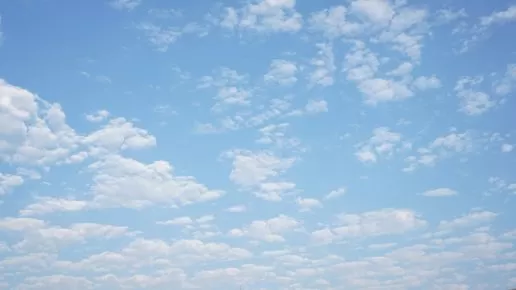
The entire sky was gone. It felt like a part of me was missing, like the top of my skull had been removed. I felt untethered, as if I could be sucked upwards and into it, into that blankness, that nothing. The sky was a cosmic plughole, draining the world.
I had to go inside. I refused their invitations to join them for the day’s adventures. While they were out I packed and left, making my way back to the city. As I travelled I hoped bitterly that the pollution density there would mean fewer blue-sky days.
My therapist asked me what blue meant to me. Asked me why I had chosen to erase it, to refuse it. In her eyes, I was avoidant. Which was ironic because I couldn’t see her eyes at all – blue. That was too much for me. I sent an email after the session and said I wouldn’t be attending therapy anymore.
Her questions did make me think though. What did blue mean to me?
It meant that deep, cold colour you saw in documentaries about polar bears laying on wind-sculpted icebergs. It meant the purple-blue shadows in the snow at winter time. But it was also tiny forget-me-nots dotted around my parents’ back garden in summer. Blue was the ocean in Greece, my fingers trailing over the side of a boat, the sun seeming to pat my head with heat.
Blue was more – people use it as a shorthand for melancholy. It was the dusty sadness of things now lost, then remembered. It was coolness, yet also softness. It was the colour of a god’s skin. It was blueberries. It had come to mean a baby boy, where once it had meant a baby girl. Either way, people had decided it belonged wrapped around our infants.
It was there in summer and winter, in the freeze and the heat. It could be so small, like a thrill of petals, or vast as the whole sky. Blue, it turned out, was woven throughout everything. It was the perfect complement to plant-green, the perfect match for cloud-white.
My friends started worrying.
One said I’d stopped being fun. One offered to pay for a private doctor to see if anything could be done. Another said to get over it – I still had the rest of the rainbow to play with.
They were right – I needed to move on. I decided to hold a funeral for blue. In order to get over it, I needed to mourn and say goodbye. I scheduled the funeral for the next Thursday, which the forecast had predicted to be overcast. I could still not stomach leaving the house in clear weather and had taken to working from home.
I invited ten friends. I asked them to all wear blue and bring something blue which they could bear to be parted with. Eight friends and my boyfriend turned up. I’d piled all my own blue clothing and objects into a hole in the back garden. I’d had to dig the hole myself after my boyfriend refused to help me. He said the whole thing was ridiculous. I was harbouring private doubts about the longevity of our connection as I welcomed everyone, my body sticky with sweat, all my muscles aching.
I asked everyone to name something blue that they loved. Louise seemed to think it was a joke until I started quietly crying. My boyfriend went indoors without saying a word. Someone cleared their throat.
Then all eyes turned to me.
Blue, I said, I never realised what you meant to me until you were gone. I don’t know why you left, but I want you to know that I miss you.
I paused, feeling stupid.
I didn’t notice you when you were here, but now that you’re not, you’re everywhere.
It started to rain. My friends made nachos and drank beer inside while I filled in the hole, once again by myself. They didn’t stay long once I joined them. Everyone seemed to have somewhere else they needed to be. Louise gave me her red-taste-blind cousin’s phone number and a quick hug as she left.
That night I dreamed I was walking in the garden. I knew I was dreaming because the garden stretched on and on, narrow as in real life, but now like a road, heading out on to the horizon. I walked until I reached the blue grave. The mound was not muddy earth as I had left it, but grassed over. Tiny shoots were appearing all over it, plants growing from the soil and everything I had buried there. I desperately wanted to see their little buds open. I knelt on the earth and waited.
In the morning, I woke to dust shoaling through a sunbeam. I rolled onto my back and rubbed my face. I’d overslept. I pushed the duvet off reluctantly and pulled the curtains open the rest of the way.
It was a beautiful day. The sun was shining, and the sky was—
About the Author
Nomi McLeod is a writer and artist. Both her visual and written work often engage with stories of the land, particularly those from folklore. In the past she has also worked as a circus artist, a theatre dresser and an artist’s model.
She lives in Devon with her partner, daughter, twin sons and a black cat.
Nomi has been writing stories since she was six, but only started sending work out into the world last year after turning 39. Her short story ‘Cage’ was shortlisted for the 2025 Bridport Prize. Her written work has appeared in places such as Gramarye Journal, Chthonic Lit Magazine, The York Literary Review and the Ecological Citizen.