A Bridge Across
By Tom Harvey
Early Sunday morning, two cars in the town car park at the top of the hill, both white with frost, waiting for the sun, and both with a parking ticket. Ours are the only tyre tracks. The hatchback in the corner has a baby on board sticker in the back window. Maybe a mum, Saturday night out on the town with girlfriends, midnight and too drunk to drive home. A taxi back, late for the cross babysitter. Now a forty-pound fine for abandoning her car on top of the hundred quid splashed on the night. Worth it, hopefully. To get home safe.
I put four hours on the pay and display, even on a Sunday, a bit cheeky of the council. Me and my son unload the bikes from the back of our car.
‘You checked your tyres?’ I say, trying to be helpful.
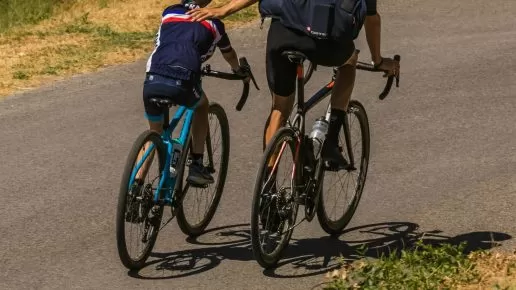
He gives me a look. At fourteen he’s got a keen interest in cycling. It’s good to have him with me, out on the weekend rides, beating him up the hills, pushing him hard on the sprints for the village signs. Not letting him win, keeping him keen. Those other teenagers nursing hangovers this morning. Us, breathing country air, riding through forests and fields, just the odd deer or rabbit crossing the road ahead. I’m proud to have him along, showing him all this. God’s own country.
We click into our pedals and ride carefully round the car park barrier onto the high street, avoiding the broken glass. The bins overflow with pizza boxes and chip wrappers. Beer cans left on walls and in the gutter waiting for collection. An empty bottle of cheap vodka, carefully placed on the railings of the zebra crossing where a traffic cone sits on top of the traffic lights, which turn red as we reach them. The high street’s deserted and silent except for the alarm-clock beeping of the lights. We wait for no one to cross. The bin men won’t be out till Monday, so for now the remains of Saturday night spill out everywhere, all the rubbish from kids too drunk to care.
I can see my son, in a few years’ time, here on a night out. One of hundreds of kids converging on the town from the dozens of quiet villages. He’ll be part of the war zone, part of the shouting, screaming and drinking, part of the smashed bottles and kebabs. I want to get him through, safe to the other side, but there’s only so much I can do. The lad’s got to grow up somehow.
He’s stopped his bike up ahead, looking down at something in the road. A woman’s brand-new shoe, high-heeled, lavender-blue suede with a row of delicate sequins round its crafted heel. Exquisite, in the mucky road. A new shoe, yet to stand on tiptoe to be kissed, or have its toe trodden on by the dancing boys.
He gets off, and I hold his bike as he lifts the shoe gently, a baby bird fallen from the nest. There’s a neat patch of wet grime on the other side of the shoe where it’s nestled into the slush of the road. He takes the shoe to the kerb, his bike cleats hard on the tarmac. He places the shoe on the yellow plastic tub full of winter salt and road grit. The shoe is dignified again, like it’s back on display in the shop, hopefully to be found, reunited, ready for the happiest of times, for parties, for weddings and adventures. We ride off, quietly, both of us looking back, half hoping to see the shoe gone.
Ten minutes later, we’re outside the town, heading towards Cold Chapel and the silence of the empty landscape. The fields and trees and slow-running rivers. Everything still. Even the black water seems to be resting, content with its secrets. The chill air and the hard land. The trees watching, with half an eye on the two of us, early morning interlopers on our strange machines.
I’d learnt to ride on these roads. Heading out on winter mornings, with a gang of older blokes, all then working at Nissan or the giant chemical works at Pigdon. Chatting now and then, about who was doing what, who’d had kids and who was now a grandfather, but the sparse chat was mostly about bikes. If I was struggling on one of the hills, I’d feel a firm hand on my lower back, pushing me up the steepest part toward the top. The same if I left a gap to the bike in front; a friendly shove. Any swerving or dangerous riding was met with a shout, and that was how I learnt to ride. How I learnt most things. Few words said or needed, a nudge, a helping hand or a friendly shout. And that was how I taught my son, too.
I remember my first crash, heading down the hill to the quarry at Blackburn. I wondered why I was suddenly ahead of the group. The others, of course, had braked, knowing the bottom bend had been worn hard as glass by the stone lorries. Off I came. Slamming into the road, helmet whacking the tarmac, realising too late what the warning shouts behind had meant. Then it was still. A reverential quiet. A group of concerned men looking down. Waiting. I sat up, feeling like I’d crashed into a wall.
‘Back on the bike then, son.’ And off we went. Me, tentative and aching, them, smooth in tight formation, like nothing had happened. A hand on my shoulder. ‘You’ll not do that again.’
My son and I reach the bottom of the winding rise to the Priory, both standing at the same time, bikes tilting under us, weight and muscle hard on each pedal. Breathing deeper. The cold oxygen and the musty woods. We seem all that moves, everything else stilled by the greyness of the day. No sound but our gulping breaths. I’m alongside my boy, watching him strain as he struggles with the gear, desperate to keep up. ‘Keep it going.’ And he does, until he can’t, collapsing back down into the saddle with the effort. Gasping like he’s drowning on the hill, almost going backwards, as I carry on to the top without him.
Over the brow of the hill, I wait for him. I can see past the ruined Priory to the distant grey hills of Allenheads, the old Killhope mine in the valley leading up to Sparselea then sliding down again to the river at Cragslaw which runs all the way to the coast at Shields. A resolute, unchanged landscape. No skyscrapers here, no glass and concrete – what a place to ride a bike. In the valley, two pigeons sail gently across the winter field towards the copse. I wonder if the empty trees will ever have leaves again.
My son arrives, panting, heaving his way to the top. I think about giving him a moment to recover, but he’ll learn nothing from that. ‘Good job,’ I say. ‘Crack on.’
A fast, winding run down from Sowerby to Burnhope. The only sound is narrow tyres on a wet road. Now my son zips ahead, pointing or calling out the holes and the worst of the water. I ride with him for a bit, then let him go. He’s thirty yards in front, no fear; he’s never smashed into an icy road taking a bend too fast, ending up in a hedge. He whips round the corners, hitting his angles, balancing his bike, like a swallow banking in the wind.
‘Next one’s tight!’ I shout, as he hits an acute angle, knee out like a motorcyclist, and disappears, too fast, round the bend. I brake, listening for a shout or the sound of metal on tarmac. Round the bend and he’s gone. In the ditch maybe, no sign. I should never have let him get ahead. I ride on, searching, standing on the pedals to see over the blackthorn hedge, looking for his red helmet, pedalling faster to find him. Round the next bend and he’s standing with his bike in the road, next to a small dead fox. Its teeth are showing, like it had a split second to know what was about to happen.
‘A car, d’you think?’ my son says.
‘Lorry from the mine, maybe,’ I say.
‘We should bury him.’
‘The rooks’ll have him.’
‘We’ll move him at least?’ my son says.
As if it heard its name or could smell the fox, a rook appears, hunched on the fence post a dozen yards away. It stares at us, complaining like an angry creaking door, moving us along out of its world, so it can get its breakfast.
I ride on, slowly now, almost sedate. I look back. My son still stands, a mourner at a grave, sad at the quick passing of an animal he never knew. He climbs back on his bike and follows. Behind us, the rook is joined by two others and together they investigate the dead fox.
I reach a hand back to him. He takes my hand in his as I pull him carefully and firmly on, sending him a bit ahead. It’s a trick we’ve perfected now. The first time we tried it, a while ago, I reached back and yanked him forward so hard we both flew off in different directions, me into the ditch and him into a ploughed field the other side of the road. We laughed as we cleaned off the mud.
‘We need to practise that one,’ he said, and we did.
For a moment, up on Ormside, the sun forces its way through the dank cloud. On every ride, no matter how grey or cold or full of rain, there’s always a moment when it stops. Warmth comes into the air, and you get to see the sun. Our backs straighten, lifting our faces to the light. The rutted fields and bare trees are doing the same, basking, for a few brief minutes, in the rare sunshine. The shrill bubbling of a single curlew far off down in the valley.
‘Reckon the girl found her shoe?’ says my son.
‘Reckon she will,’ I say.
‘It was a bit like the shoes mum used to wear,’ he says.
There’s no more chat for a while as we sweep off the crags toward Drybeck, legs warm and well into our ride. We’ll soon head back west. There’s the cow-shit stink of slurry on the low fields, and we spit out the first sips of water from our bottles to avoid gulping down the muck picked up from the road.
A couple of pheasants clatter across in front of us, and fifty feet up a kestrel hovers, its head still and its wings hardly moving, fixed on some tiny movement in the field below. Sparse pickings at this time of year.
My son drops off behind me. I look back.
‘Bit knackered – gonna sit in yer wheel for a bit.’
I know him. I look ahead and can see the sign for the next village. A sign that will be the finish line for the customary sprint. I pick up the pace, shift up a gear, I hear my son do the same. This time when I look back, he can’t hide a smile. I stand and pretend to hit my sprint, driving into the pedals, fifty yards to go, icy wind, my son jumps out my slipstream and he’s up alongside, both of us standing and dipped down to the bars. I look across, he’s full tilt, giving it everything, edging ahead. I’m so proud, seeing his determination. With twenty yards to go, I stop messing round and give it full power, getting back the lead and flying past the village sign first. My son shouts with frustration and effort.
‘Getting close, son.’ I think on all the things he’s learnt in those few seconds, how to commit, how to give everything to something you might never possess, how to lose, and one day, how to win.
We thankfully stop pedalling and free-wheel through Pityme, panting and laughing. A woman with a broom at her doorstep watches us pass, stone-faced, as though offended by our Sunday laughter.
At the end of the village, before the steep drop down to the gorge, two men stand gravely talking. I wave good morning but get nothing back, which is odd, even out here. Tired now, no energy left to focus on the corners, we cruise gently down the hill, heavy on the brakes. As we approach the bridge at the bottom, a man stands coiling an orange climbing rope and staring down the valley. We pass in silence across the bridge, more men, standing quiet, some are firemen, and a fire engine’s parked in the field by the bridge. Two men are piling up heavy stones in the middle of the bridge. A six-foot section of the parapet has gone. No wonder the fire brigade are here; with the bridge wall down, anyone could go over and tumble a hundred feet down to the rocky river. The quiet men watch us pass. We’re uninvited guests at their bridge repair party. We say nothing and they say nothing. At the other end of the bridge a single car door leans against the wall and on top of the wall someone has placed a single Nike trainer.
‘Push on,’ I say, and we stand and ride a bit harder up the other side. In front of us on the rising road are two parallel tyre marks, running thirty yards down to the bridge. We ride up the middle of them, keen to get through. I keep my son beside me all the way up, giving him a helping hand on the back at the steepest part. At the top of the hill there’s a police barrier saying the bridge is closed. We stop and look back. I reach out to my son. The skid marks of the tyres lead to the break in the wall, and way below, upside down in the river, is a car with a door missing, its bonnet crumpled and windows smashed. Three firemen stand on the bank, just watching. Another fireman, wearing waders, stands waist-deep in the middle of the black river. We watch him push slowly through the heavy water and wade to the bank. He reaches out a hand to be pulled from the cold.
‘Wonder who he was,’ my son says.
I want to hug him, my son. Hold him so tight he can never escape. I almost do.
We take one last look at the broken bridge, then get back on our bikes and ride on, side by side, in silence, hoping the rain holds off.
About the Author
Tom Harvey is an award-winning writer whose work explores modern masculinity and neuro-divergent experience. He won the 2023 Seán Ó Faoláin International Short Story Competition and placed second in the 2024 Mairtín Crawford Award at the Belfast Book Festival. His short stories have been published in literary journals across the US, England, and Ireland, including Southword, Vol. 1 Brooklyn, and Litro Magazine, and featured in the 2024 Bull Anthology ‘Fragile like a Bomb.’
As a playwright, his work has been performed extensively across London, with his play POOL winning WriteNow 5. He also wrote the BBC short film Flying Home, which won at multiple international film festivals.
Tom is currently finalizing his debut story collection Lost & Found and is a qualified coach helping writers discover the meanings in their work.
Find his website here.